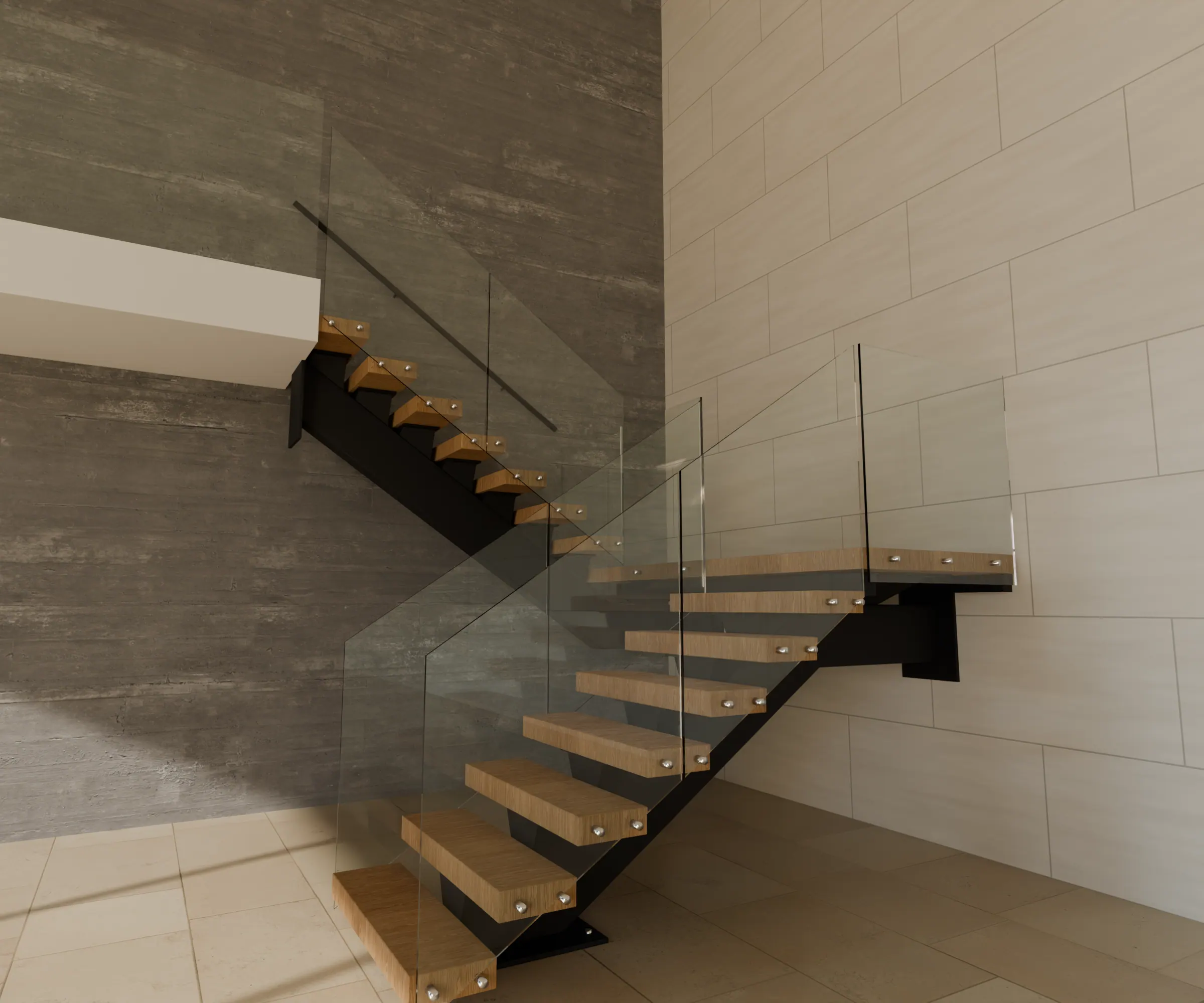
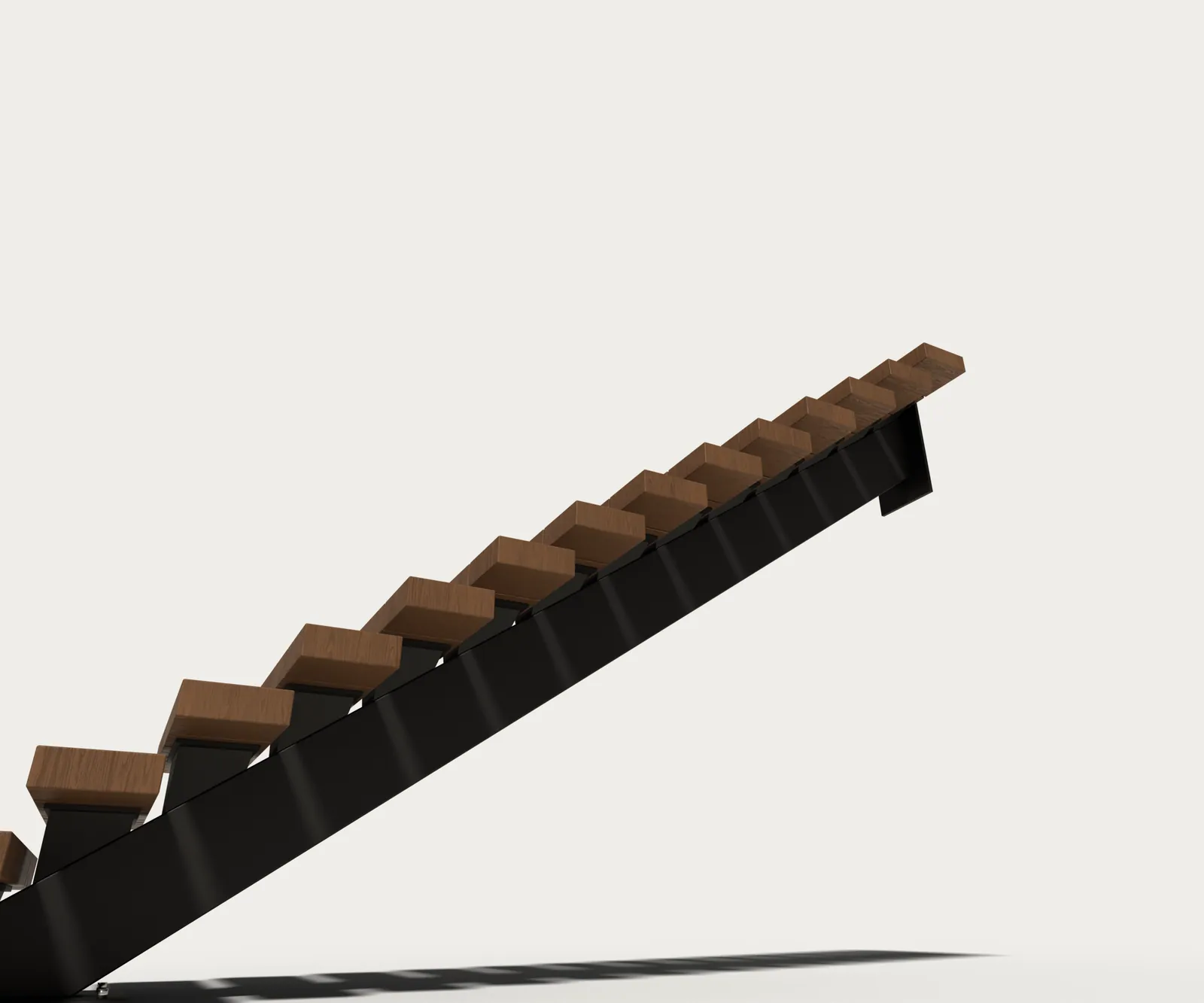
Mono · straight
NJfrom $28kconfirm
NYCfrom $34k
- 9–10′ floor to floor, 15 treads
- HSS 12×6×½″ tube, matte black
- White oak, 42″ × 3¾″, natural oil
- Cable or black rod guard
Stair systems
Layouts
Residential
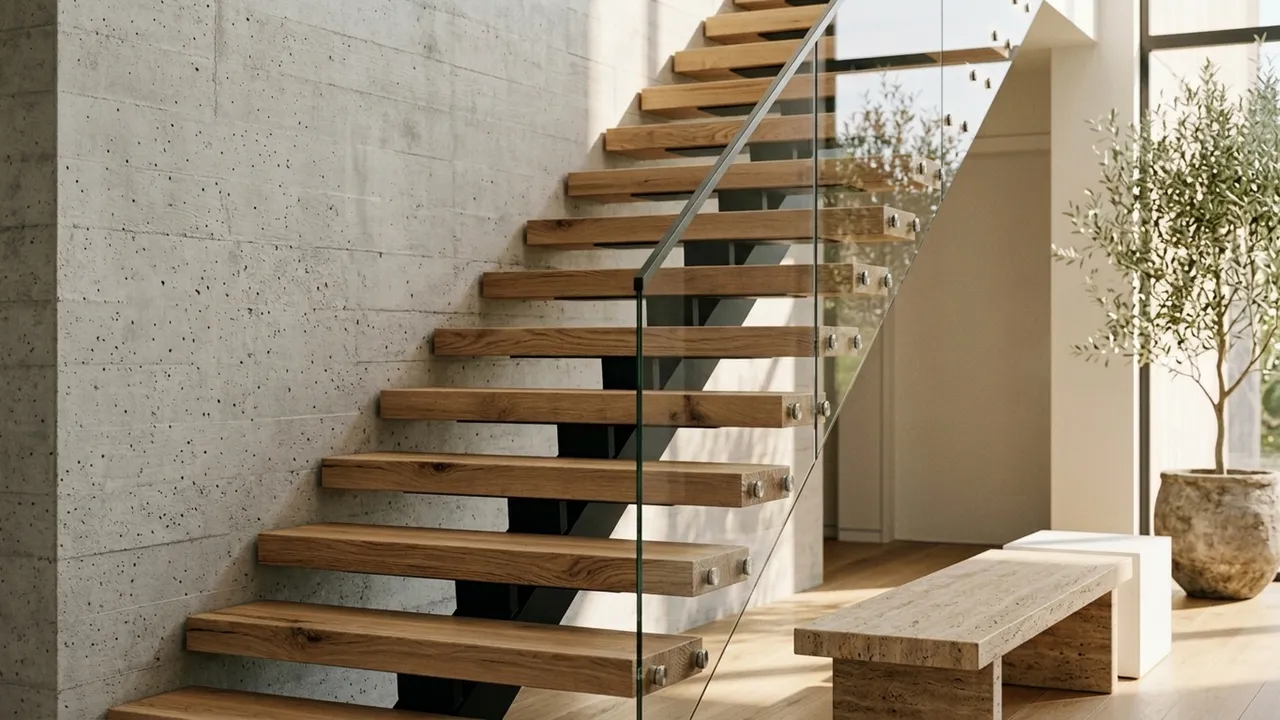 Straight mono stringer →
Cable & metal
Wood & combinations
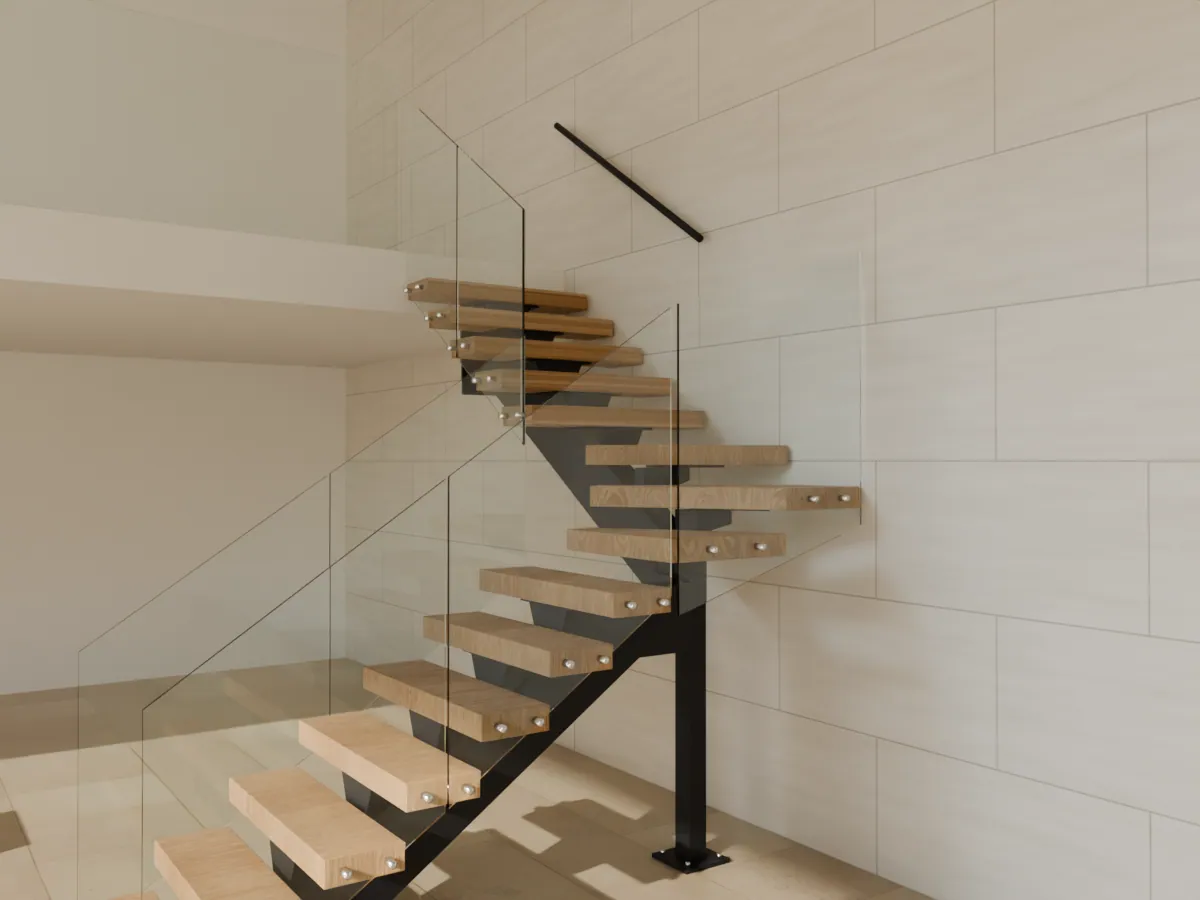 Frameless glass →
Tread profiles
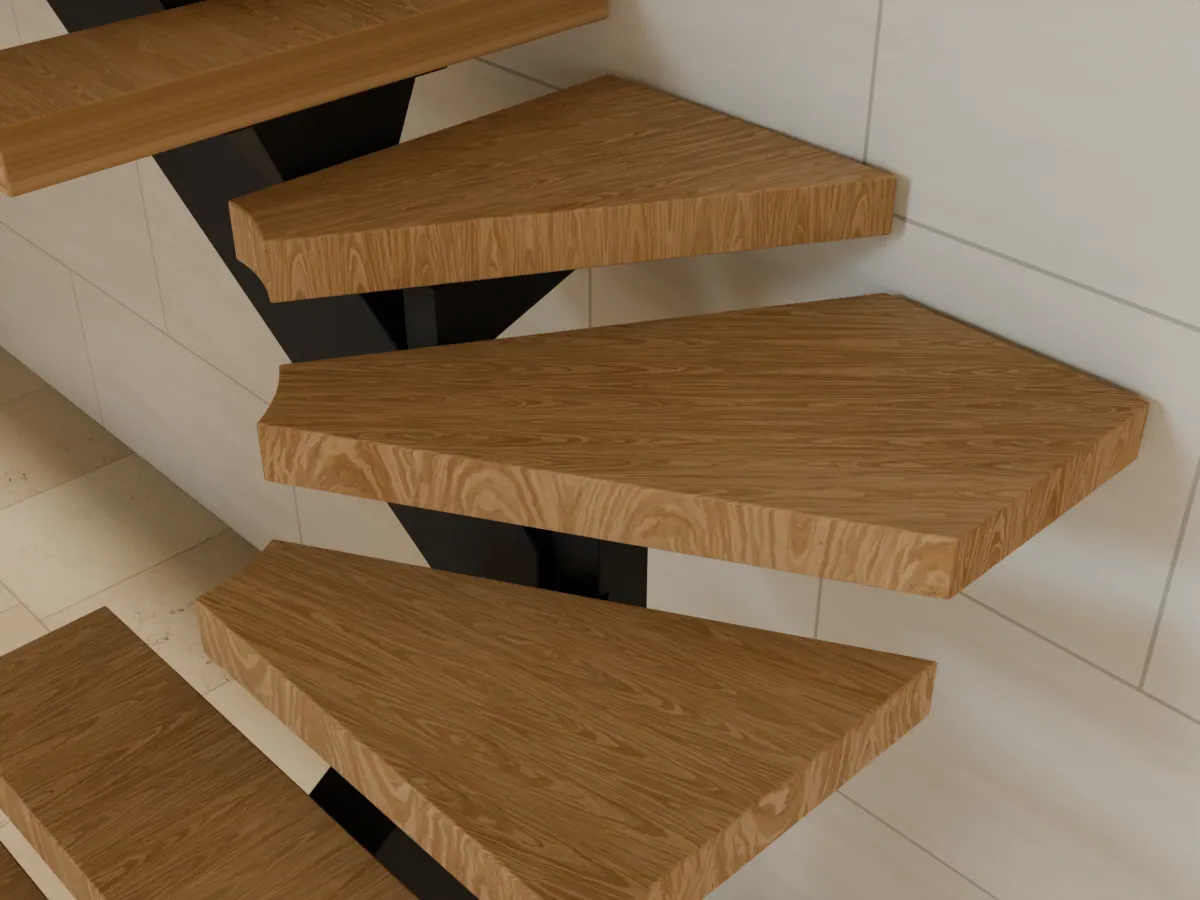 Solid white oak →
Stair lighting
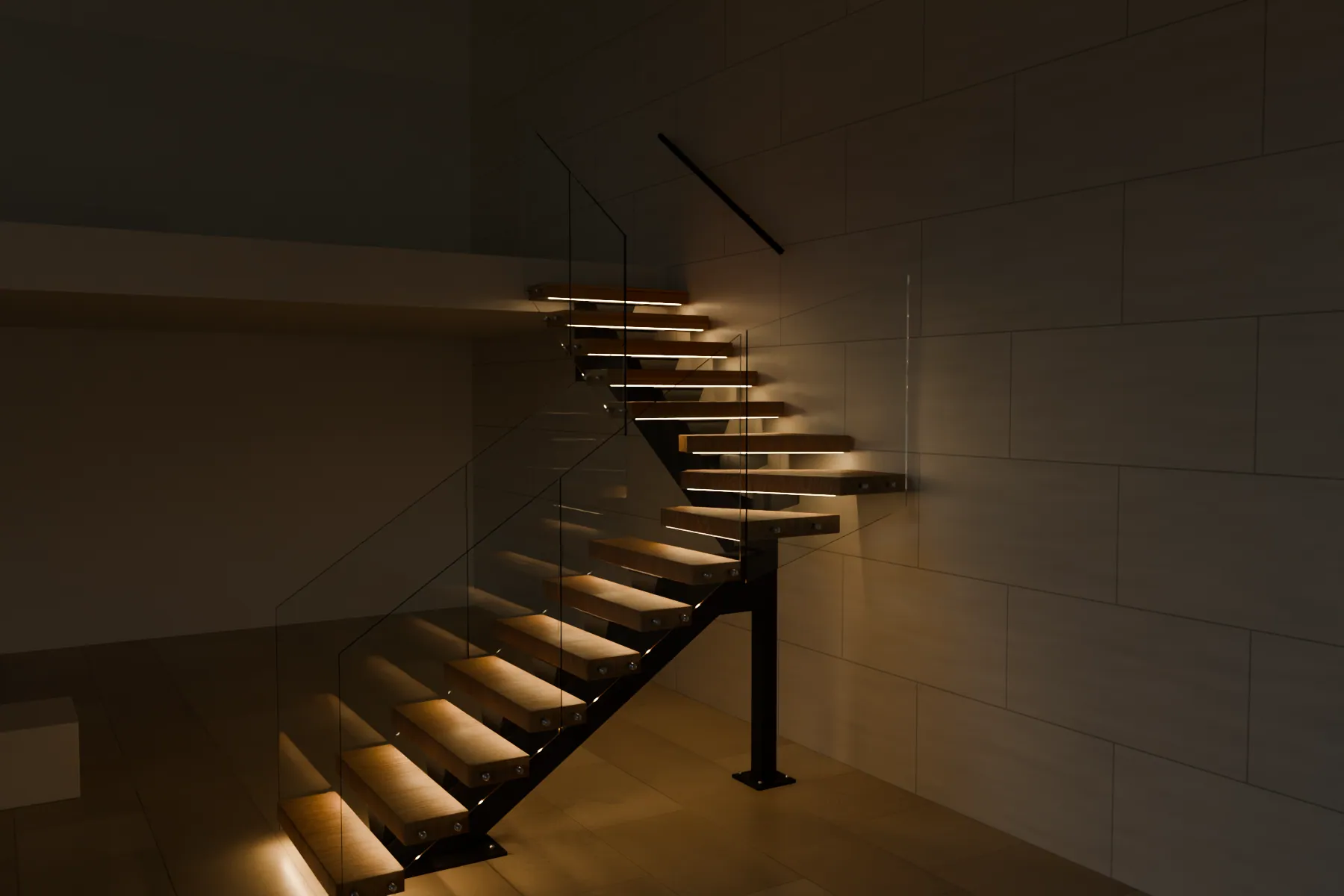 Light under every tread →
Who we work with
Stair systems
Mono stringer
Layouts
By material
Residential
Commercial
All floating stairs →Tread materials
Wood species
Tread profiles
Finishes
Who we work with
Work with us
Specifications
One closed tube. Nothing twists.
A tube steel stair stringer is one closed rectangular steel tube, typically HSS 12×6×½″, running under the center of every tread. A closed tube resists twisting hundreds of times better than an I-beam, so the treads stay level when you step on the edge. Engineered, permitted and installed in NYC, Long Island and New Jersey, from $28k in NJconfirm.
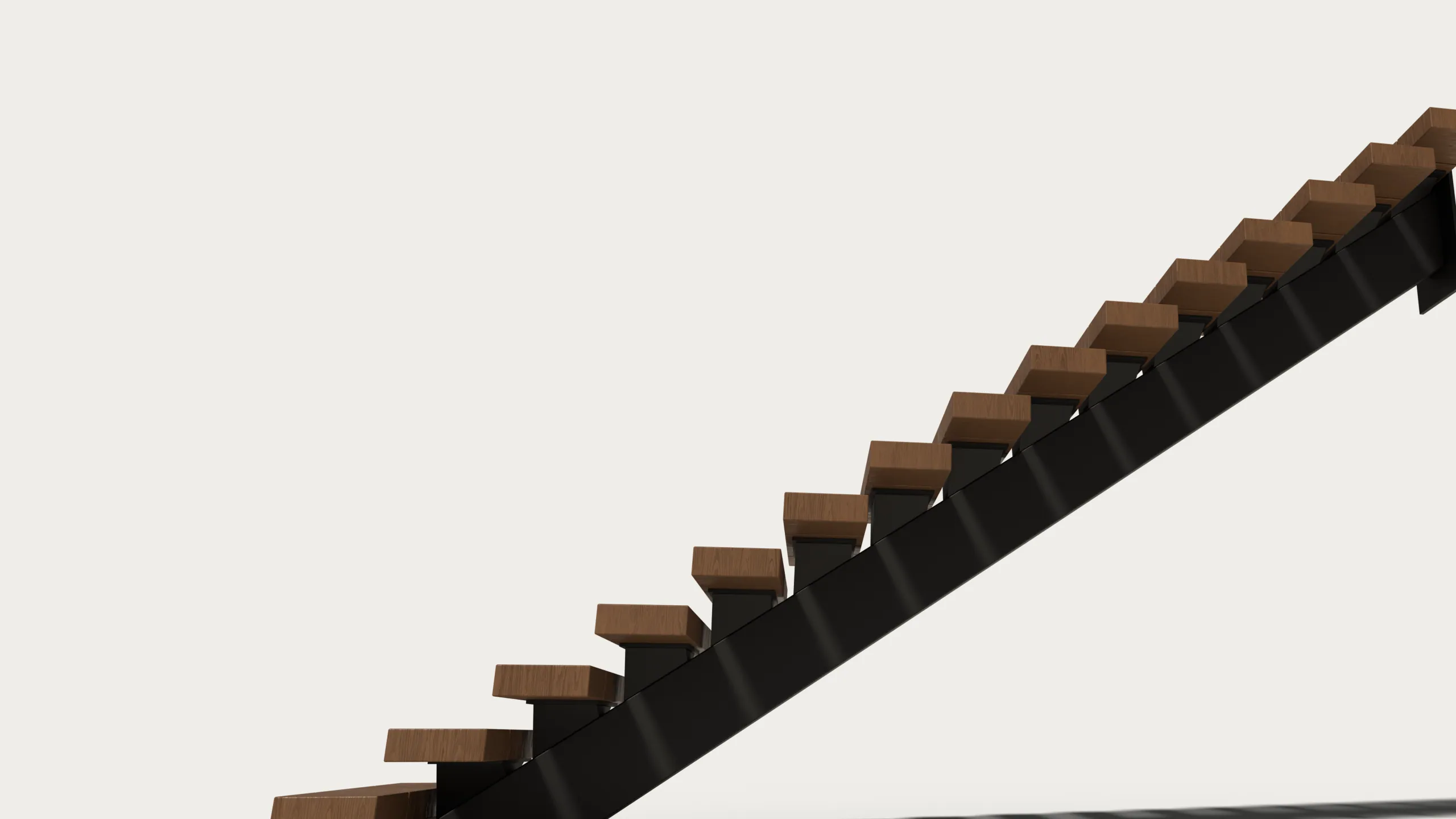
Every STAIRIX mono stringer is built on structural steel tube, called HSS (hollow structural section). Its four walls form a closed box. When someone stands on the end of a tread, the tread tries to twist the spine, and a closed box resists that twist far better than any open shape of the same weight. That is why the treads of a good mono stringer stay level and quiet.
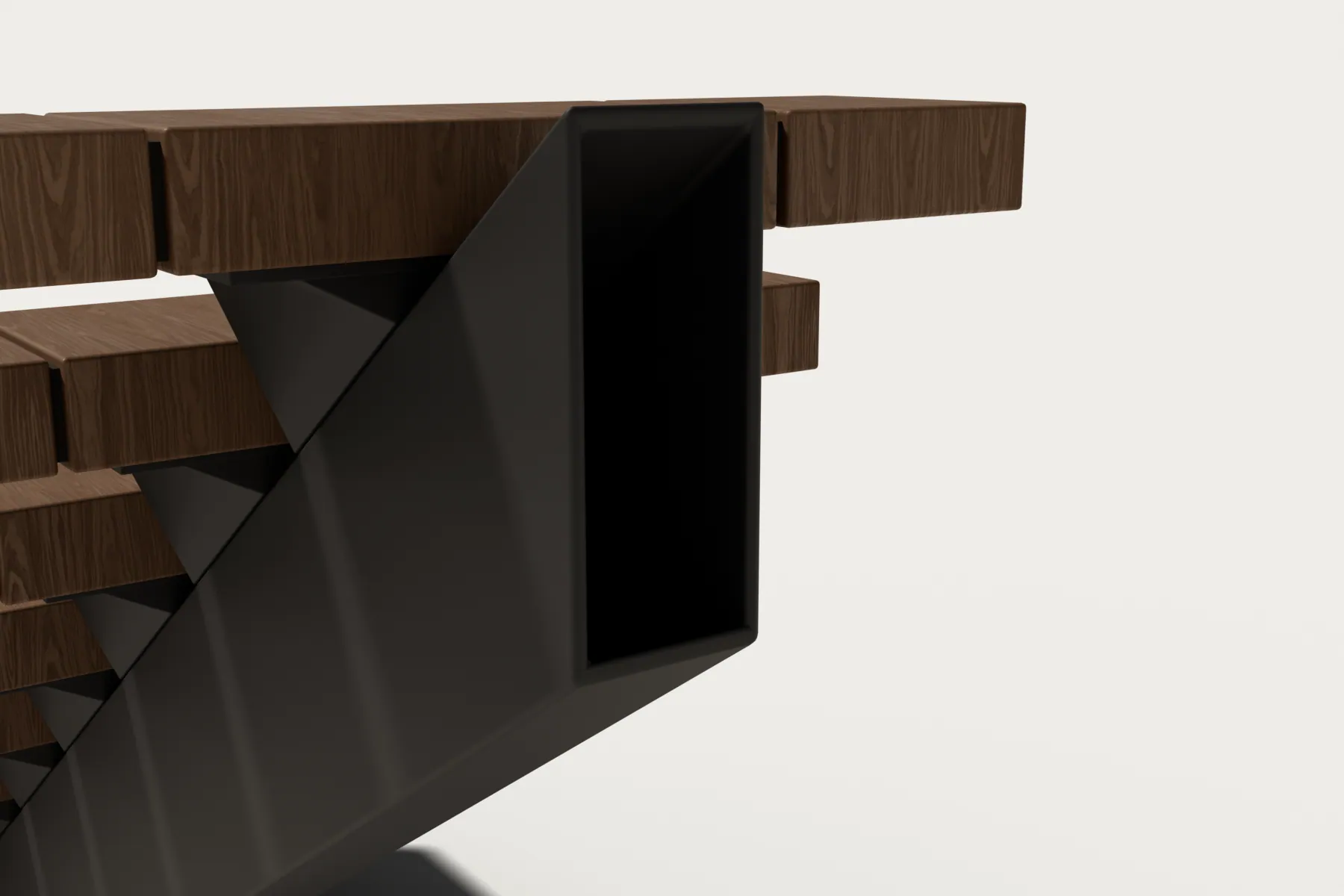
HSS 12×6×½″, cut open · four ½″ walls, closed corners, ASTM A500 Grade C
Pick a spine and put 300 lb on the outer edge of a 42″ tread, the load the building code asks every tread to carry. Watch how far the edge drops when the spine twists.
Closed tube: the edge moves less than the thickness of a sheet of paper. This is the STAIRIX reference spine.
16′ spine, ends held against twist, 300 lb at the edge of a 42″ tread. Simplified elastic estimate to compare shapes; a licensed PE checks your stair.
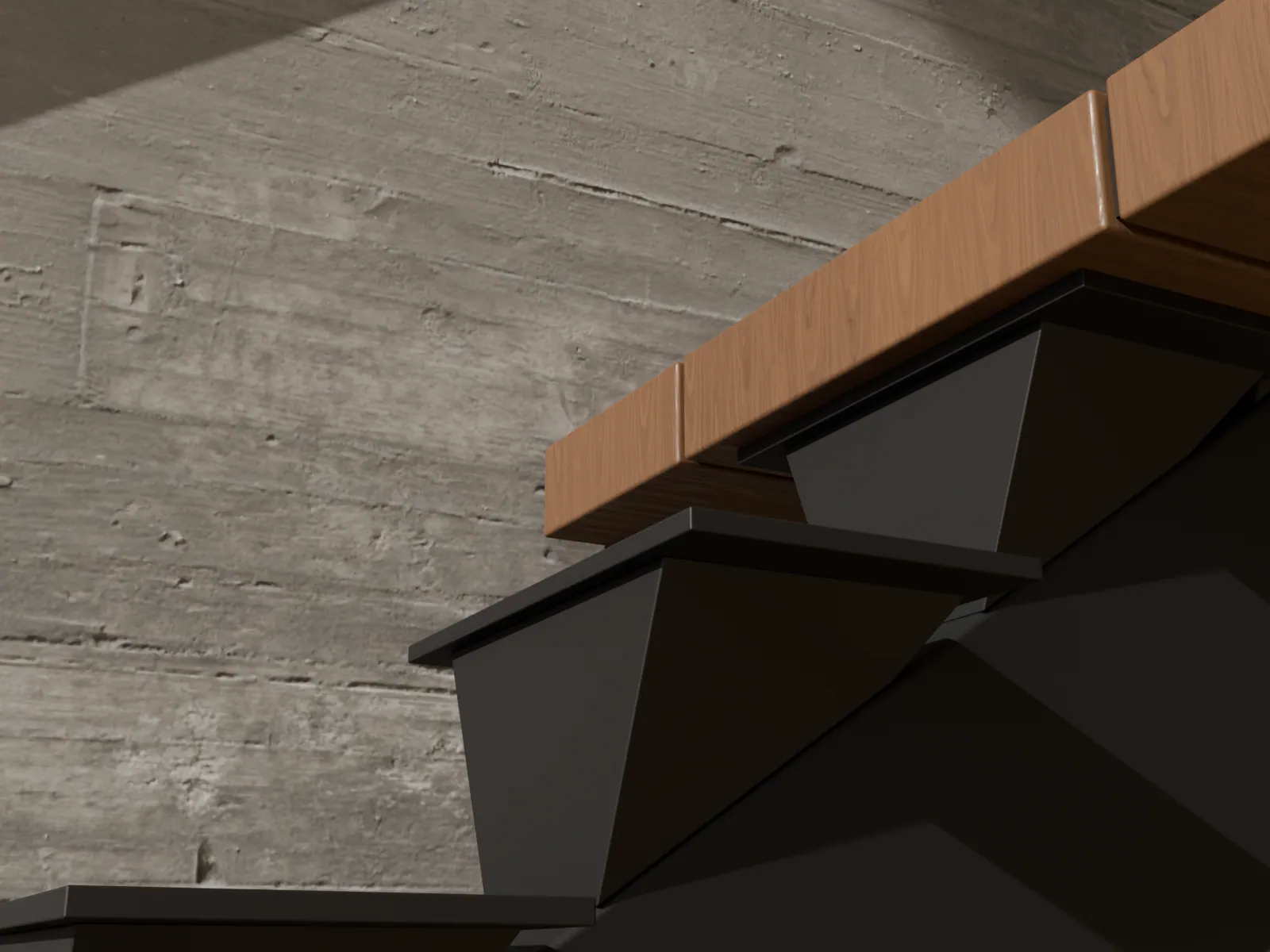
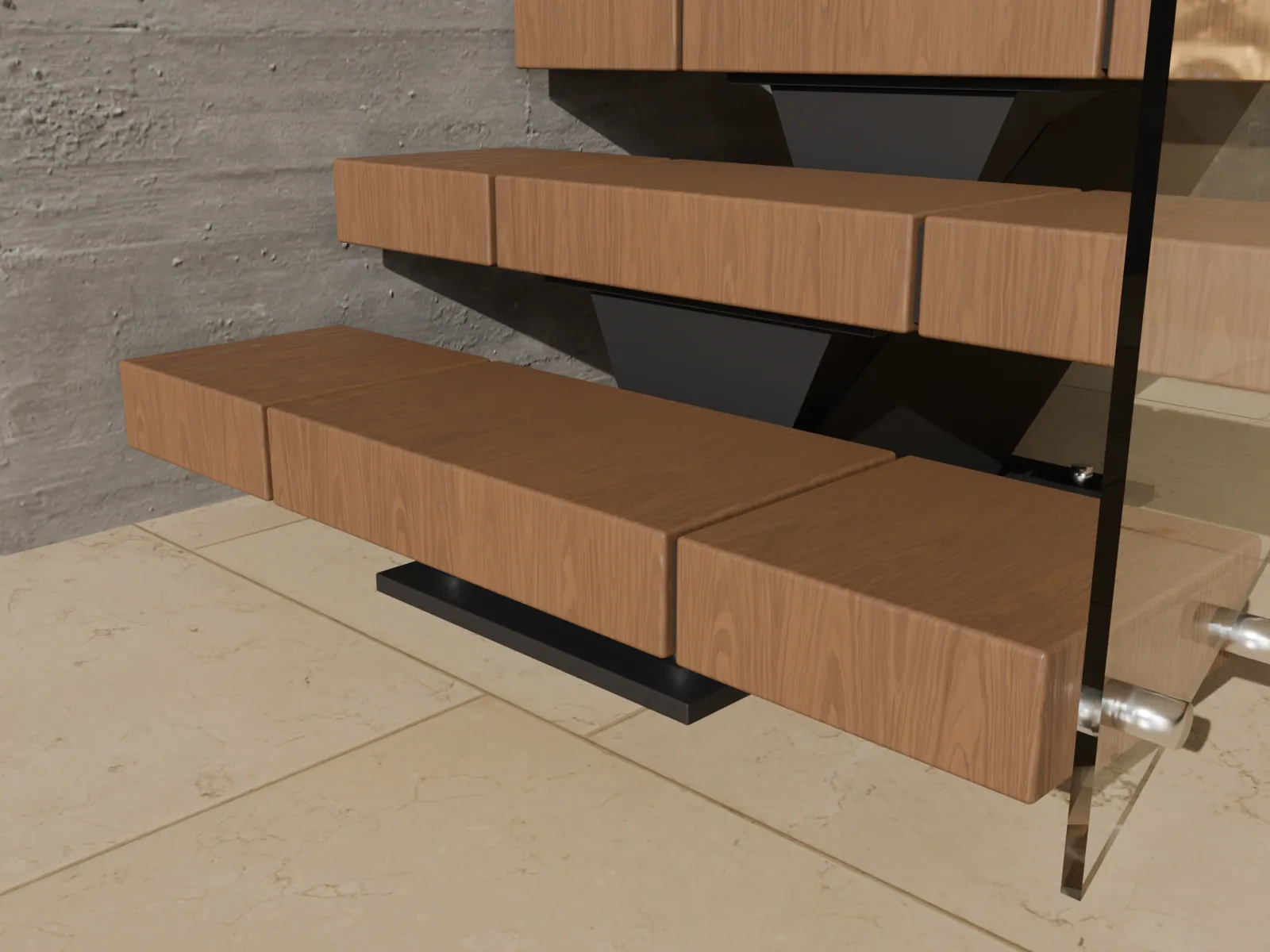
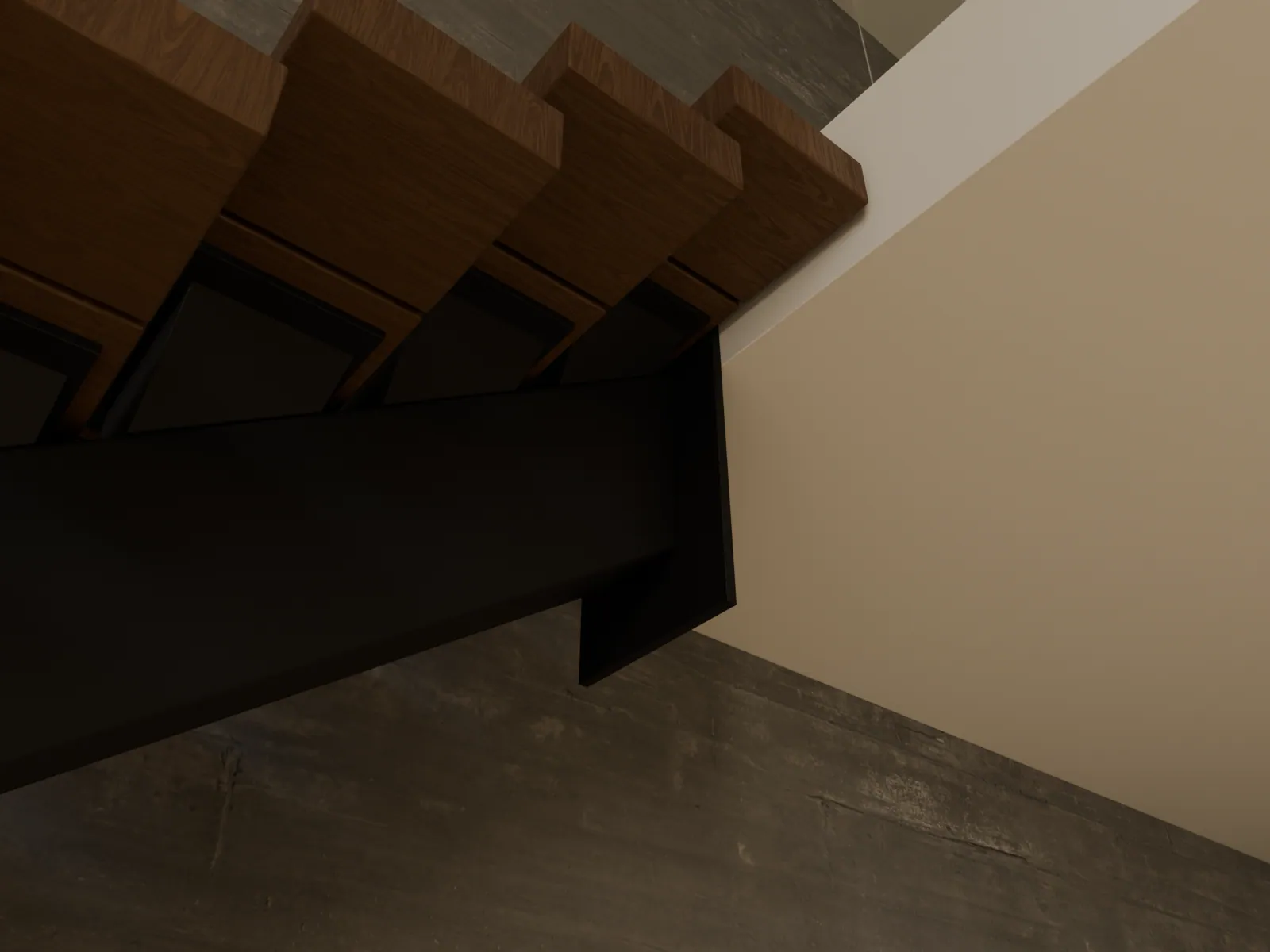
On a mono stringer the steel is on show. Every plate, weld and bolt is drawn before it is cut.

The spine size follows its length. Pick your floor-to-floor height and where the stair goes, and see the tube our engineer typically starts from.
At this length the 12″ tube keeps the stair above 8–10 Hz, so it does not bounce under quick steps.
| Sloped length of spine | Typical tube | Weight | Twist stiffness J | Where we use it |
|---|---|---|---|---|
| up to 10′ | HSS 6×4×¼″ | 15.6 lb/ft | 23 in⁴ | Short flights, half-levels, lofts |
| 10′–12′ | HSS 8×4×⅜″ | 27.5 lb/ft | 48 in⁴ | Split levels, 6–7′ rises |
| 12′–14′ | HSS 10×4×⅜″ | 32.6 lb/ft | 65 in⁴ | 8′ floor to floor |
| 14′–16′ | HSS 10×6×⅜″ | 37.7 lb/ft | 136 in⁴ | 9′ floor to floor |
| 16′–22′ | HSS 12×6×½″ | 55.7 lb/ft | 222 in⁴ | 10–12′ floor to floor · our reference spine, cambered over 18′ |
| over 22′ | Add a landing or a post. One flight may rise at most 12′-0″ in NYC and 12′-7″ in NJ. | |||
Weights and J from AISC section properties (A500). Typical starting points, not a design: the PE sizes your tube for your tread width, guard and floor.
Mono stringers are built from several steel shapes. Here is how they compare, honestly.
| Spine shape | Looks | Twist | Best for | At STAIRIX |
|---|---|---|---|---|
| Rectangular tube HSS 8×4 to 12×6 | Slim from the front, deep from the side | Excellent | Most stairs, any span | Standard · this page |
| Square tube HSS 6×6, 8×8 | Chunkier, more industrial | Excellent | Short spans, lofts, a heavier look | Same price · ask for it |
| Flat bar fin 1–1¼″ plate | A thin blade, very minimal | Weak on its own | Short spans, or tied to a wall | Flat bar stringer → |
| Folded plate box laser-cut plate | Sharp edges, follows the treads | Excellent (closed) | Sculptural stairs | Zig-zag stringer → |
| I-beam or channel W8, C10 | Industrial, flanges on show | Poor: treads tip | Double stringers, hidden framing | Not for mono stringers |
| Round tube or rolled pipe, bent HSS | Soft, curved | Excellent | Curved and helical stairs | Curved mono stringer → |

A mono stringer is only as good as its ends. Both are moment connections, sized by our engineer.
The tube lands on a ¾″ steel plate, about 16″ × 16″, with four anchors into concrete or through-bolts into added wood framing. It can sit on the finished floor or hide under it, so the tube grows out of the floor.
The most loaded joint. It carries weight, a horizontal push and the twist from every tread, up to about 3,400 ft-lb on a long spine. A ¾″ header plate is through-bolted into doubled LVL or a steel beam at the floor opening, never hung on a joist hanger.
A 17′ tube weighs close to 1,000 lb and will not go up a brownstone stair. We cut it in the shop where the bending is small and join it on site with an internal steel sleeve and Grade 8 bolts. Once painted, the joint is a hairline.
What goes into a STAIRIX tube steel stringer for a typical 10′ floor-to-floor stair.
| Component | Specification |
|---|---|
| Tube | HSS 12×6×½″, ASTM A500 Grade C, 50 ksi, about 17′ long |
| Brackets | V brackets from ¼–⅜″ plate, welded all round, seat plate 16″ × 9″ |
| Welds | Shop welds by AWS D1.1 certified welders, visible welds ground smooth |
| Foot | ¾″ base plate, 4 anchors ½–⅝″, scanned for rebar before drilling |
| Top | ¾″ header plate, through-bolted. A moment connection, not a hanger |
| Splice | Optional internal sleeve with Grade 8 bolts, placed where moment is low |
| Treads | 42″ × 11″ × 3¾″ solid wood, 18″ past the tube each side |
| Loads | 40 psf, plus 300 lb on the edge of any tread |
| Stiffness | L/480, first frequency 8–10 Hz or more |
The tube is sandblasted, primed and powder coated in our partner shop. Pick a color, or show the steel itself.
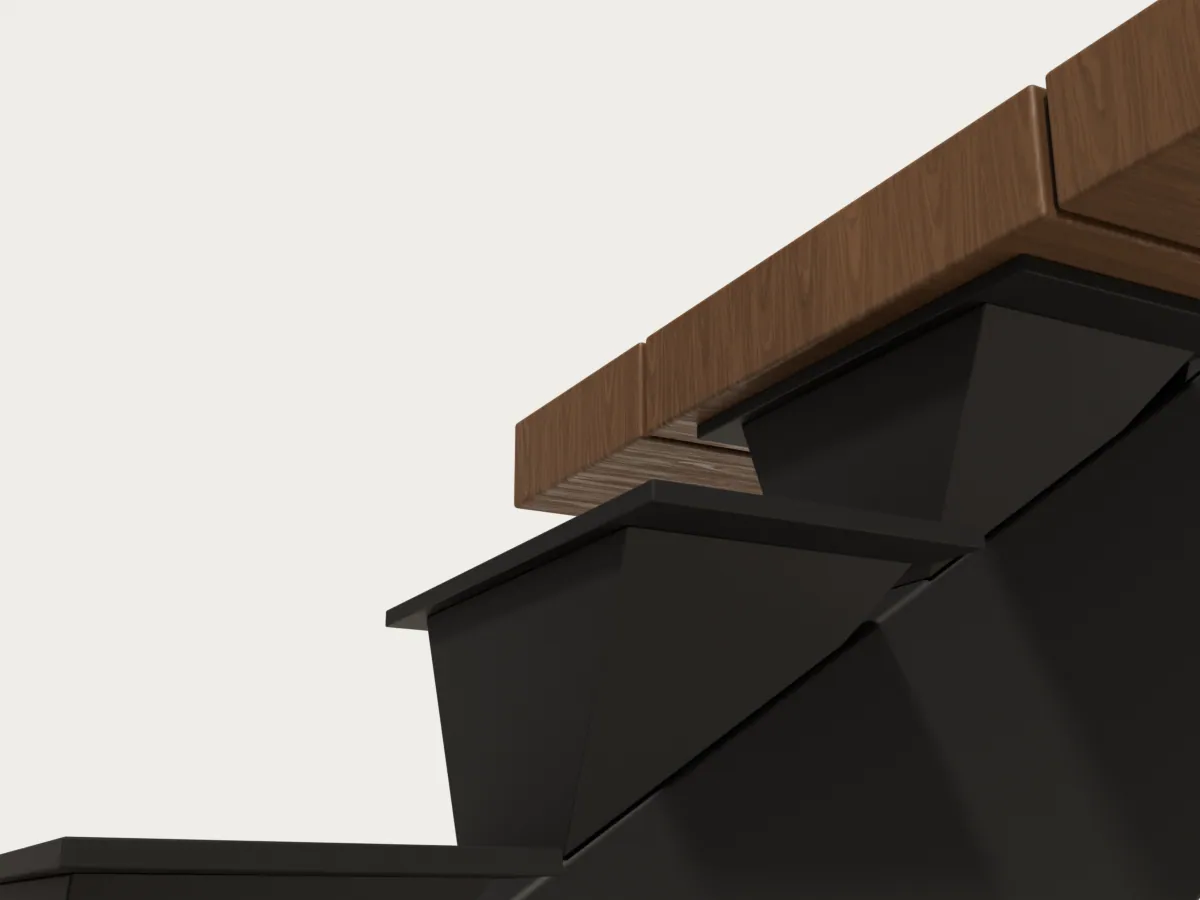
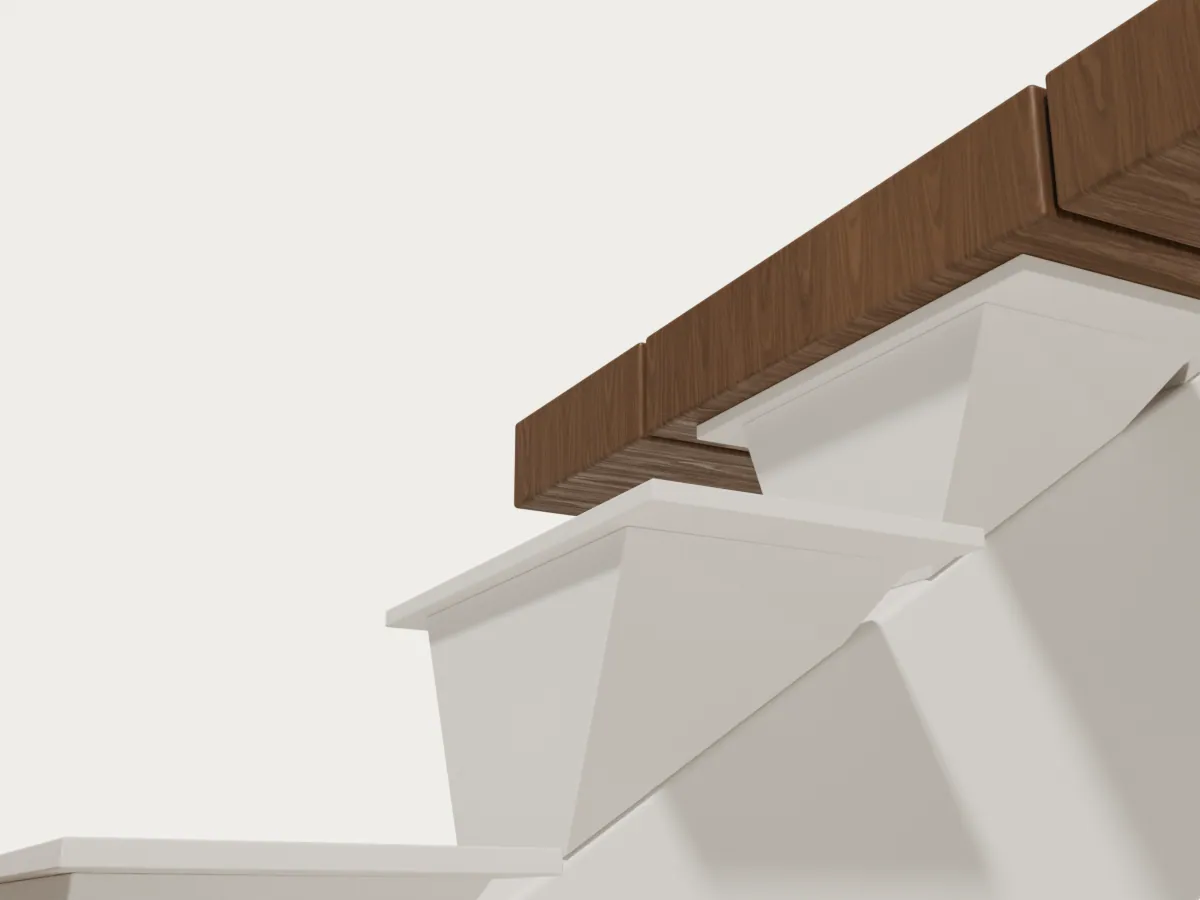
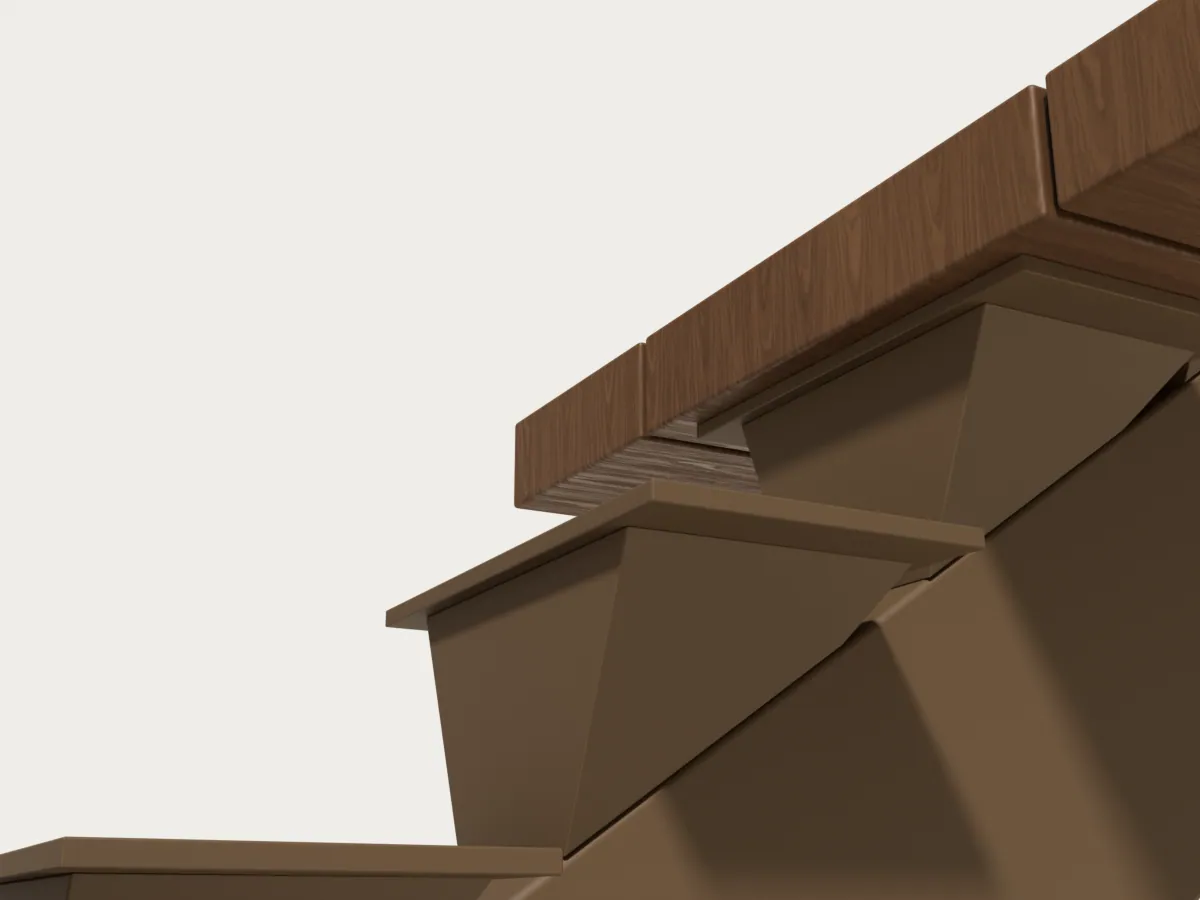
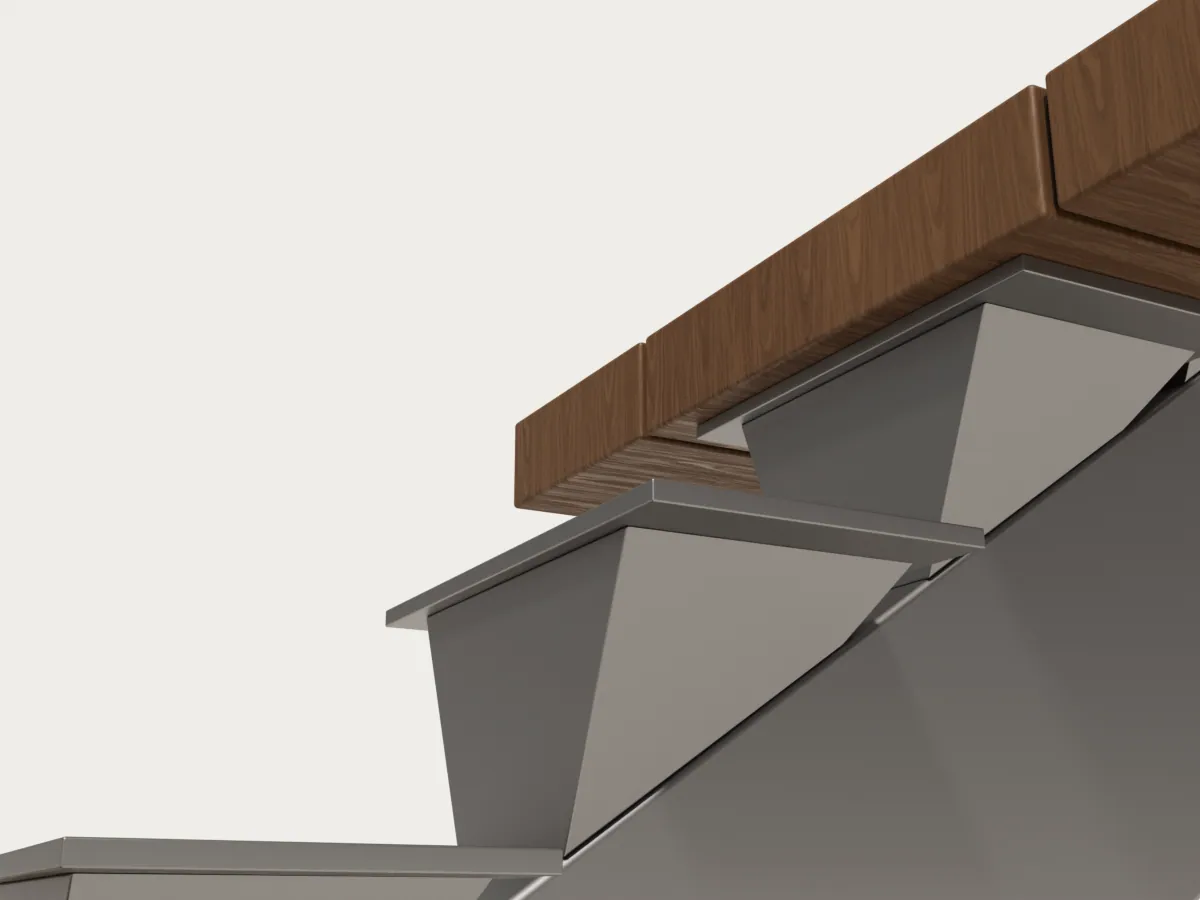
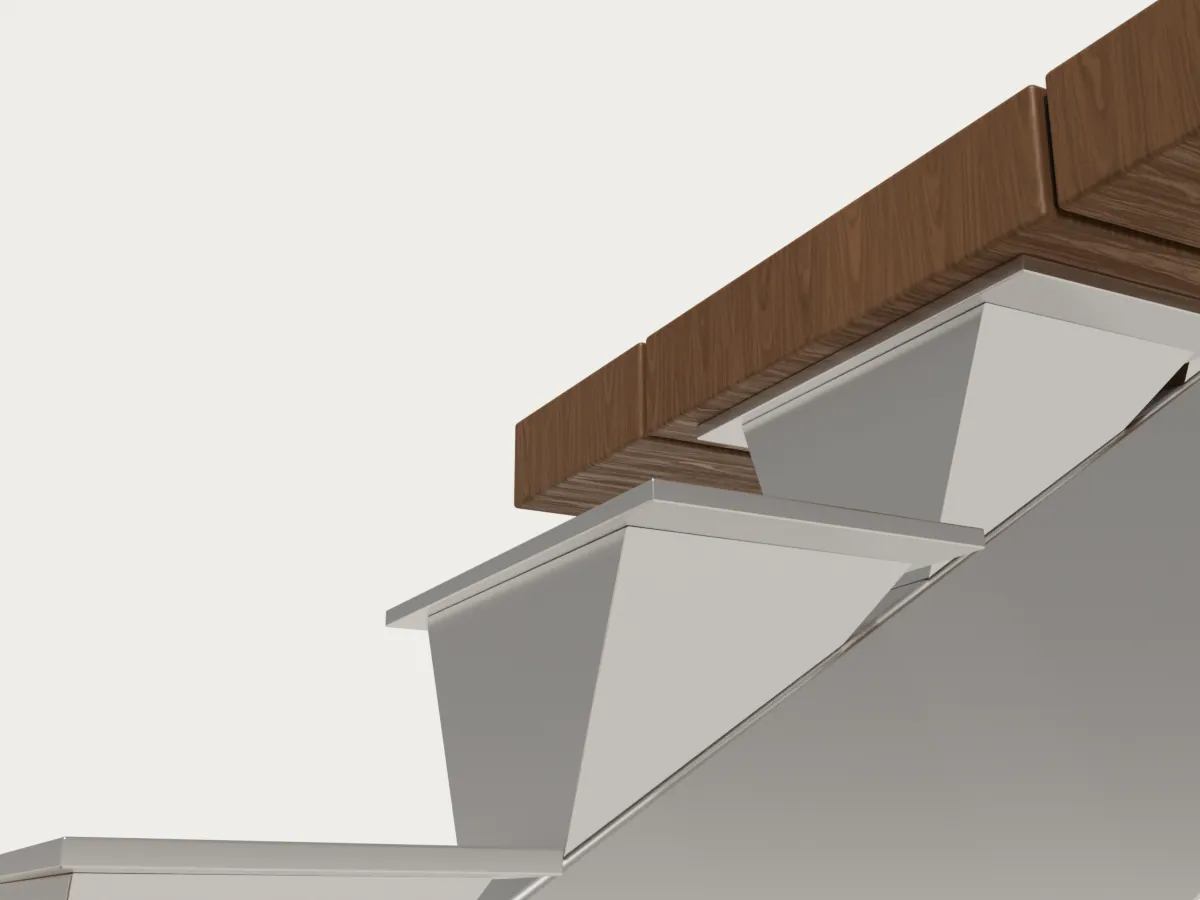
Hot-dip galvanized to ASTM A123, with vent holes drilled in the tube as ASTM A385 asks, then powder coated (duplex). Stainless for salt air at the Jersey Shore or the Hamptons.
Exterior floating stairs →Any RAL color on request. All metal finishes → · Powder coat →
Installed prices include design, PE engineering, the steel tube, fabrication, powder coat, delivery and installation. Permit fees and co-op deposits are billed at cost.
| Steel option | Effect | Steel option | Effect |
|---|---|---|---|
| Square tube instead of rectangular | no change | White, bronze or any RAL color | no change |
| Raw steel under clear coat | quoted | Brushed stainless tube | +40–60% on steel |
| Hot-dip galvanized + powder coat | quoted | Shop splice for tight delivery | +$0.8–1.5k |
Steel is only about 5% of what a mono stringer costs: engineering, fabrication, finishing and installation make up the rest. Full cost breakdown →
A floating stair is a big decision. Here is what we put in writing.
HSS sizing by span, base and header connection details, tread attachment and the shop splice. We produce PE-stamped shop drawings for your approval.
Still unsure? Send a photo of your stairwell and we'll tell you which tube fits.
A stair stringer made from structural steel tube (HSS), a hollow rectangular or square section with four closed walls. In a mono stringer stair, one tube runs under the center of the treads and carries all of them on welded brackets.
It depends on the sloped length of the spine. As a starting point: up to 10′ an HSS 6×4, 12–14′ an HSS 10×4, 14–16′ an HSS 10×6, and 16–22′ an HSS 12×6×½″. Over about 22′ add a landing. A licensed PE confirms the size for your tread width, guard and floor.
An HSS 12×6×½″ weighs 55.7 lb per foot, so a 17′ spine for a 10′ floor is about 950 lb before brackets. That is why we often splice it for brownstones and elevators.
Open shapes twist easily. With 300 lb on the edge of a tread, a W8×31 I-beam can let the edge drop about an inch on a 16′ span. A closed tube of similar size moves a few thousandths of an inch. I-beams work for double stringers, not for one central spine.
Rectangular tube puts the depth where the bending is and looks slimmer from the front. Square tube looks heavier and suits short, sturdy flights. Both resist twist well and cost about the same.
Yes, if it is hot-dip galvanized with vent holes and then powder coated, or made of stainless steel near salt water. An interior powder coat alone will rust outside.
Not when the tube is sized for its length. We design to L/480 and a first frequency of 8–10 Hz or more, stiffer than most floors.
From about $28k installed in New Jersey and $34k in New York City for a straight 9–10′ stair with oak treads and a cable or rod guard. With frameless glass, about $36–48k in NJ and $42–58k in NYC.
Your height and location from above are already filled in. Add a photo of each end of the stair.